


No products in the cart.

Contrology vs. Contemporary Schools. How Has the Pilates Method Evolved?
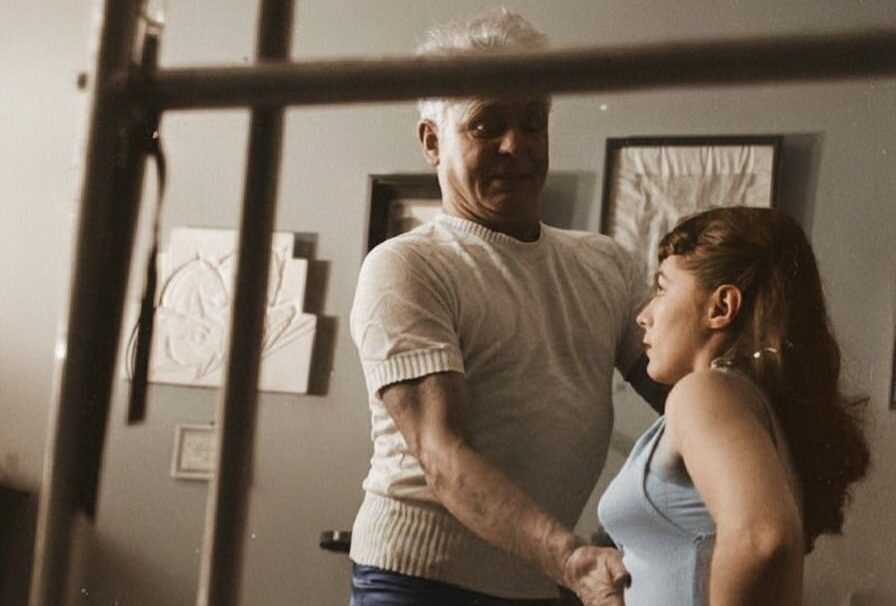
When Joseph Pilates created his method, he was not thinking about fitness, trends, or the commercialization of movement. His goal was something far deeper – to restore the body’s natural intelligence. Contrology was meant to be a response to chaos, tension, and humanity’s disconnection from its own physicality.
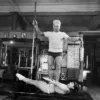
In his studio on 8th Avenue in New York, he worked with dancers, athletes, artists, and individuals recovering from injuries. He observed, analyzed, and corrected movement not according to a formula, but according to the needs of each individual. His method was simultaneously rigorous and intuitive, demanding and deeply humanistic.
Over time, Pilates began to evolve not because it lost its value, but because the movement world began to understand the body better. What was once intuition and experience is now supported by science. And it is precisely at this point that the story of contemporary Pilates schools begins.
7 Principles of Contrology
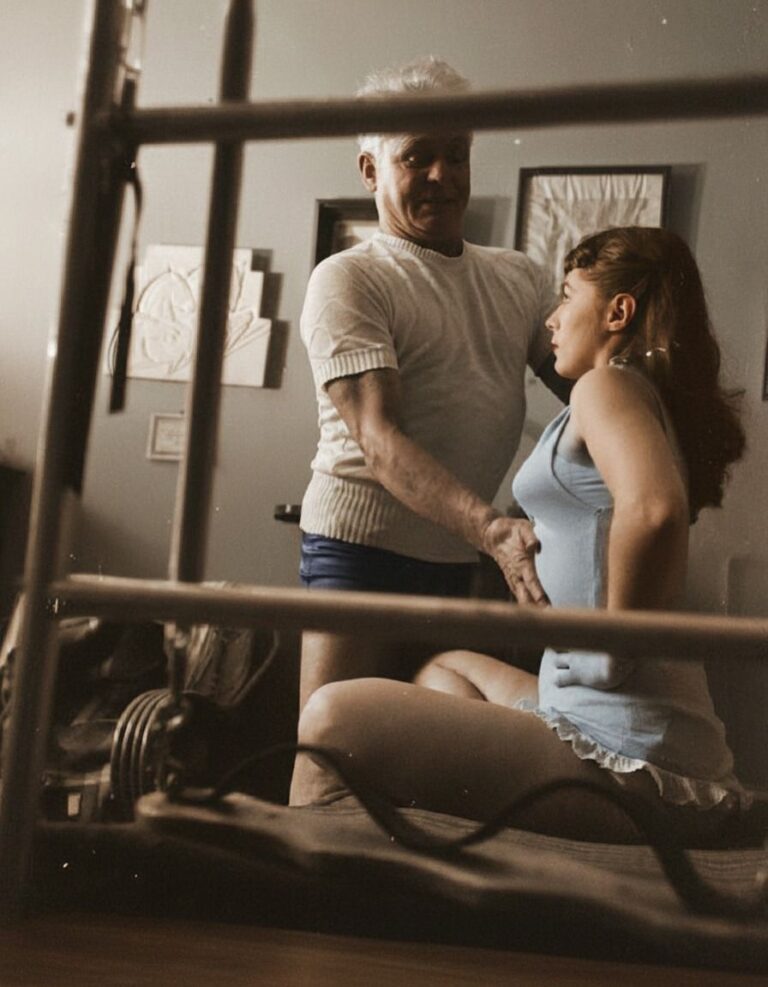
Contrology was not a collection of exercises. It was a philosophy. Joseph taught through principles that remain relevant today, regardless of school, style, or level.
7 key principles of the Contrology method and their application in Sinya Pilates practice:
- Concentration – conscious focus of the mind on every movement of the body.
- Control – precise direction of body movements without haste.
- Breath – deep, conscious breathing synchronized with movement, often through the ribcage.
- Centering – strengthening the core muscles that stabilize the torso, pelvis, and shoulders.
- Precision – accuracy in executing each movement, with emphasis on quality.
- Flow – transitions between exercises should be smooth and harmonious.
- Balance – achieving balance in the work of individual muscle groups.
From Contrology to Contemporary Systems
The contemporary development of the method worldwide occurred through the work of international schools that systematized instruction and introduced modern anatomical knowledge to classical exercises, including STOTT PILATES®, BASI Pilates, and MK Pilates. It was these schools that brought new interpretive tools to Pilates:
- knowledge of biomechanics and functional anatomy,
- understanding of fascial work,
- neuroplasticity and sensorimotor control,
- rehabilitative and preventive approaches,
- conscious exercise progression.
This made Pilates an even more universal method, accessible not only to dancers and athletes, but also to individuals recovering from injuries, experiencing pain, movement limitations, or chronic tension. However, with the development of the method came a risk: loss of depth, disconnection from philosophy, reduction of the method to “beautiful exercises.”
This is why the question is so important: how do we preserve the essence of Contrology while utilizing modern knowledge?
From Control to Conscious Stabilization. What Has Changed Over the Years?
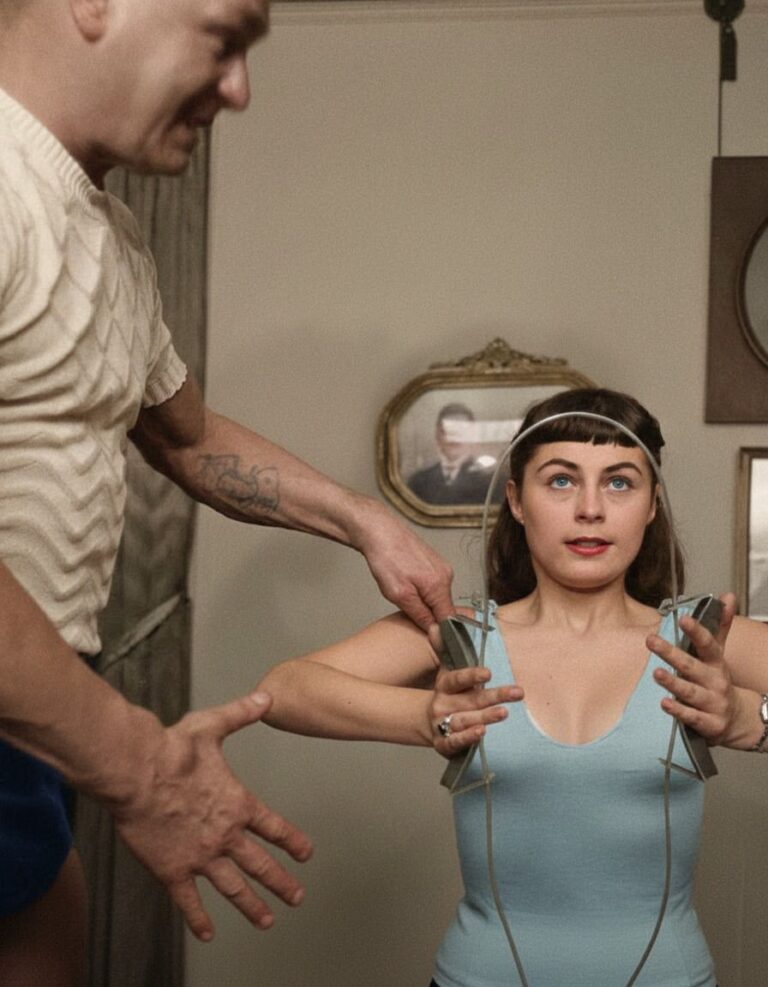
Joseph Pilates spoke of control; today we speak of central stabilization, deep structural work, and segmental control. The difference lies not in changing the idea, but in its precise understanding.
Contemporary approach:
- considers neutral spine position,
- works with breath as a stabilization tool,
- teaches activation without excessive tension.
From Pattern to Individuality
In Contrology, exercises had their structure and sequence. Today we know that every body has a different history, injuries, asymmetries, compensations, and lifestyle. This is a significant step toward conscious work with the individual.
Contemporary Pilates:
- analyzes movement patterns,
- takes fascial restrictions into account,
- adjusts tempo and range of motion,
- treats the student as a process, not a case.
From Equipment as Tool to Equipment as Support
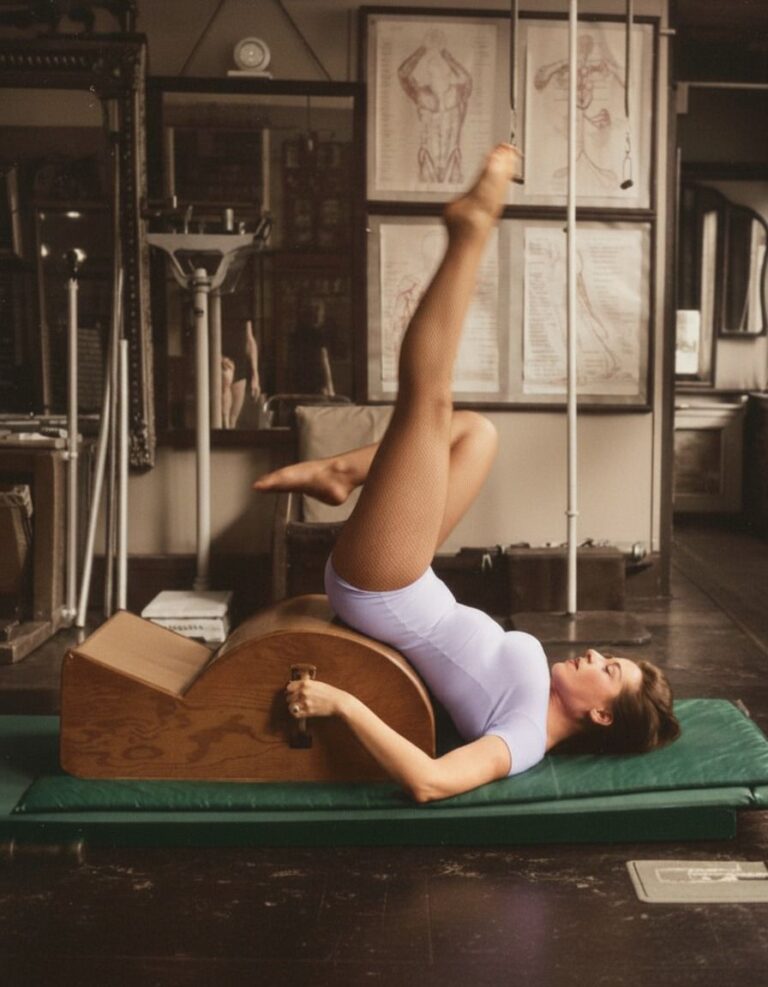
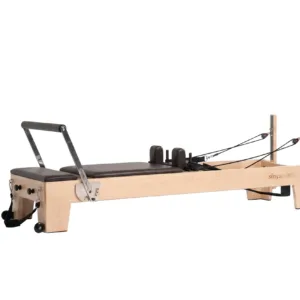
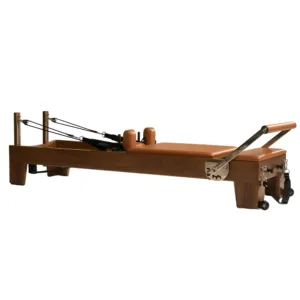
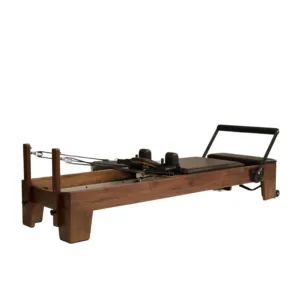
Joseph’s first machines were brilliantly simple, created with function in mind, not aesthetics.
Contemporary equipment:
- is adjustable,
- is adapted to different body types,
- enables precise progression,
- supports rehabilitation and functional training.
The idea has not changed; technological possibilities have.
From Method to Movement Language
In the past, Pilates was a “system of exercises”; today it is a language through which we describe movement.
Contemporary language is:
- the language of mindfulness,
- the language of quality,
- the language of relationship with the body,
- the language of presence in movement.
And it is precisely at this point that the Sinya philosophy emerges.
How Have We Implemented Classical Values in Sinya Pilates?
Sinya does not choose between classical and modern. Sinya bridges both worlds.
Respect for Contrology
At Sinya, the foundation is:
- the idea of unity of body and mind,
- precision of movement,
- conscious tempo,
- the presence of the teacher as guide.
The legacy of Joseph and Clara remains intact.
Modern Understanding of the Body
At the same time, Sinya utilizes:
- 3D biomechanics,
- fascial work,
- spiral organization of movement,
- current knowledge of stabilization and motor control.
This makes training safe, effective, and deeply transformative.
Intelligent Educational System
Sinya does not teach “exercises,” but teaches:
- how to think through movement,
- how to observe the body,
- how to guide the individual, not the sequence,
- how to develop as a teacher-guide.
This is education based on awareness, not on formula.
Tradition as the Foundation of the Future
Pilates has not survived 100 years because it was fashionable. It survived because it was authentic and grounded in understanding the human body.
Today our task is not to change it, but to understand, develop, and pass it forward responsibly.
Sinya was created from precisely this need: from respect for the source and the courage to create the future. It is a space where Contrology lives not as a relic of the past, but as a conscious, modern art of movement.

Add comment