


No products in the cart.

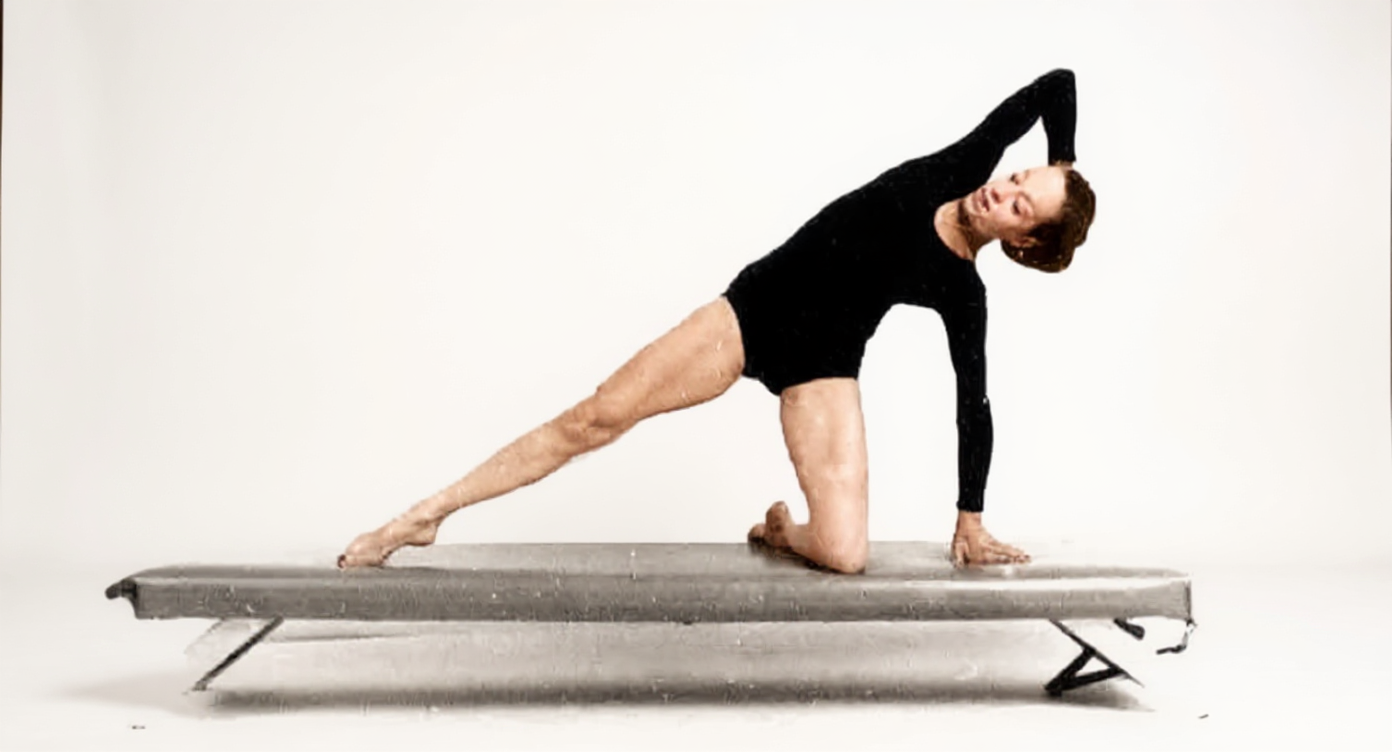
To understand how the Pilates method developed over the decades, one must know the people who co-created and passed it on. The Contrology system, created by Joseph Pilates, was passed down from generation to generation, exercise by exercise, experience by experience. Over time, this knowledge began to take the form of training programs and manuals for teachers around the world. It is important to remember that at the core of each of these systems are Joseph’s students – the Pilates Elders – who treated this work as their life’s path and developed it based on what they learned directly from Joseph and Clara Pilates.
Carola Trier was born in Germany in 1913. In her youth, she worked as a dancer and performer, appearing on dance stages and in entertainment shows. Her life dramatically changed during World War II. As a person of Jewish descent, she was interned in a Nazi internment camp in France, from which she managed to escape, emigrating to the United States in 1942.
Upon arriving in New York, she continued her artistic work. She performed as a dancer, acrobat, and an artist executing extremely demanding acrobatic figures on roller skates. Her stage career demanded immense physical fitness and body control.
Meeting Joseph and Clara Pilates
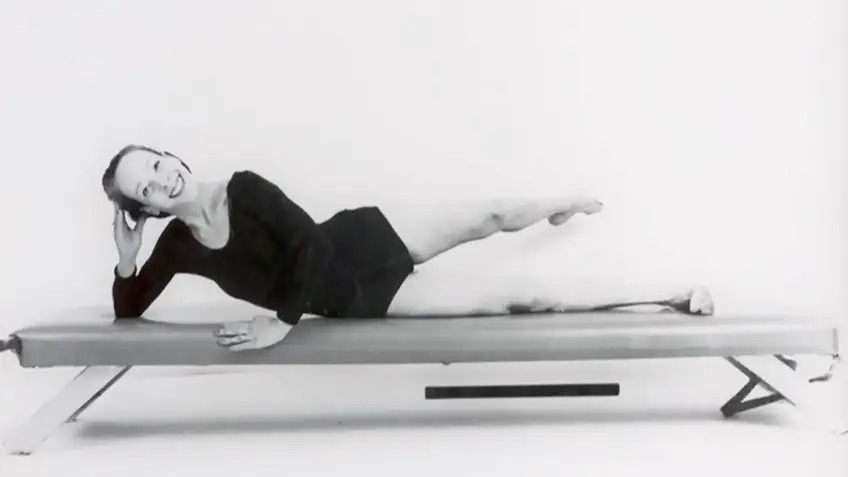
In the 1950s, she sustained an injury that threatened her continued work. It was this situation that led her to Joseph and Clara Pilates’ studio. At the studio on 8th Avenue, she began training in the Contrology system, which allowed her to return to full fitness. She was fascinated by the effectiveness of the Pilates method. She realized that Joseph Pilates had created an exceptionally effective system of working with the body that helped dancers return to fitness. This experience sparked her interest in the method as a system of working with the body.
Her Own Studio and the Development of Therapeutic Work
Carola Trier was not limited solely to working in the Pilates studio. Concurrently, she deepened her knowledge of anatomy and rehabilitation. She collaborated with Dr. Henry Jordan, who allowed her to observe the patient treatment process and even participate in observing surgical procedures. This enabled her to better understand anatomy and the potential uses of the Pilates method in the recovery process.
In the late 1950s, after more than ten years of studying with Joseph Pilates, Carola decided to open her own studio. In the meantime, she married Edgar Trier, and thus ran the studio under the name Carola S. Trier. Her studio was located on 58th Street in New York, just two blocks from Joseph and Clara Pilates’ original studio on 8th Avenue. Thanks to her collaboration with Dr. Henry Jordan and Dr. William Liebler from Lenox Hill Hospital, as well as her contacts in the artistic community, Carola quickly gained recognition, especially among dancers and performing artists.
A Modern Pilates Studio
Carola Trier’s studio differed from the one run by Joseph Pilates. While the original studio on 8th Avenue maintained an atmosphere almost unchanged since its inception, Carola’s studio was modern, organized, and minimalist.
In Joseph’s studio, students largely trained independently – each was responsible for their own exercise program. In Carola’s studio, the work was different – sessions were conducted individually. Carola and her assistants prepared the equipment, led classes, and provided detailed instructions on movement technique.
One of her students later recalled:
“Her mentoring taught me to appreciate the quality of movement, develop observational skills, and use my hands as a tool to guide movement and impart proper quality.”
The studio developed very dynamically, so Carola hired several assistants. Among them were key figures in Pilates history, including:
- Romana Kryzanowska
- Kathy Grant
Equipment and Work Style
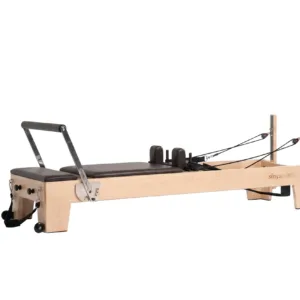
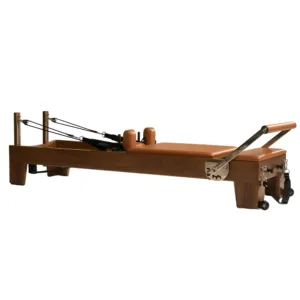
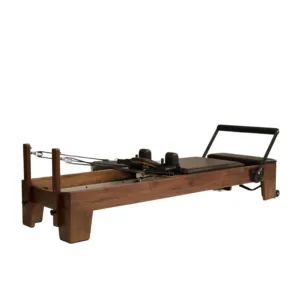
One of the more interesting aspects of Carola Trier’s work was her approach to Pilates equipment. The apparatus in her studio differed from those used in Joseph Pilates’ original studio, although the reformers still bore patent plates with his name.
The studio utilized, among other things:
- Junior Reformer – a home version of the reformer designed by Joseph Pilates
- a special version of the Ped-o-Pull with a bicycle-like seat
- various equipment modifications adapted to students’ needs
Although Carola Trier ran her studio somewhat differently than Joseph Pilates, in many aspects they remained similar. Trier was known for her strong personality and high demands on her students. She could be strict, had an energetic temperament, and did not tolerate unnecessary chatter during sessions.
Education and Popularization of the Method
Carola Trier was not only a Pilates teacher but also an advocate for movement as an element of a healthy lifestyle. In the 1960s and 70s, Carola Trier’s studio was one of the most important places for working with the Pilates method in New York. Dancers, performing artists, and individuals recovering from injuries all came there. By combining the classical Contrology method with anatomical knowledge and stage experience, Carola created an environment where Pilates began to be perceived not only as an exercise system but also as a tool for conscious body work. Her studio became a place where the next generation of teachers was trained.
In 1982, she wrote a children’s book, “Exercise, What it is, What it Does”, aimed at encouraging children to engage in physical activity and conscious movement. Although the book was not directly about Pilates, many elements referred to the ideas of movement and body work developed in the Contrology method.
The Legacy of Carola Trier
From today’s perspective, the benefits that Joseph Pilates’ method gained through Carola’s work are evident. She successfully ran her New York studio until her retirement in 1986. Thanks to her work, Pilates gradually moved beyond a single location and a single teacher, becoming a method passed down through generations. Her knowledge of rehabilitation formed the foundation for applying the Pilates method in the dance community. Today, the method is widely used in rehabilitation worldwide, and its benefits have been confirmed by numerous scientific studies. Carola Trier was a role model for many Pilates teachers, including some of the most influential masters: Lolita San Miguel, Alan Herdman, Deborah Lessen, and Jillian Hessel.
Carola Trier passed away in New York on October 28, 2000, at the age of 89. Her work was proof that the development of the Pilates method is linked to the courage of teachers who can preserve its foundations while opening it to new environments and experiences.
Czytaj również
Clara & Contrology – subtelność metody Pilatesa
Clara & Contrology subtelność metody, której świat nie docenił na czas.
Joseph Pilates i spuścizna, która porusza świat
Kim był człowiek, który zmienił sposób, w jaki myślimy o ruchu?.

Michael King
Michael King to międzynarodowo uznany edukator metody Pilates z ponad 47-letnim doświadczeniemć.




Add comment