


No products in the cart.

Clara & Contrology: the subtlety of a method the world failed to appreciate in time
In most accounts of Pilates history, Joseph takes center stage—the visionary, the inventor, the innovator, a man of strong character and a distinct vision of movement. However, right beside him, for nearly his entire life, often in the shadow of this narrative, stood a woman without whom Contrology would never have reached its full potential.
A woman without whom the method would lack its depth, softness, and human dimension. For years, history focused on what was visible: the equipment, the exercise system, the force of Joseph’s personality. Meanwhile, Clara worked quietly. Without manifestos.
Without her name on the door. She did not build her own brand. She did not seek recognition, yet she was the heart of Contrology.
She was an attentive observer, a nurse by training and calling, a teacher of extraordinary sensitivity and intuition. She gave the method what cannot be written into an exercise protocol: the human dimension of movement.
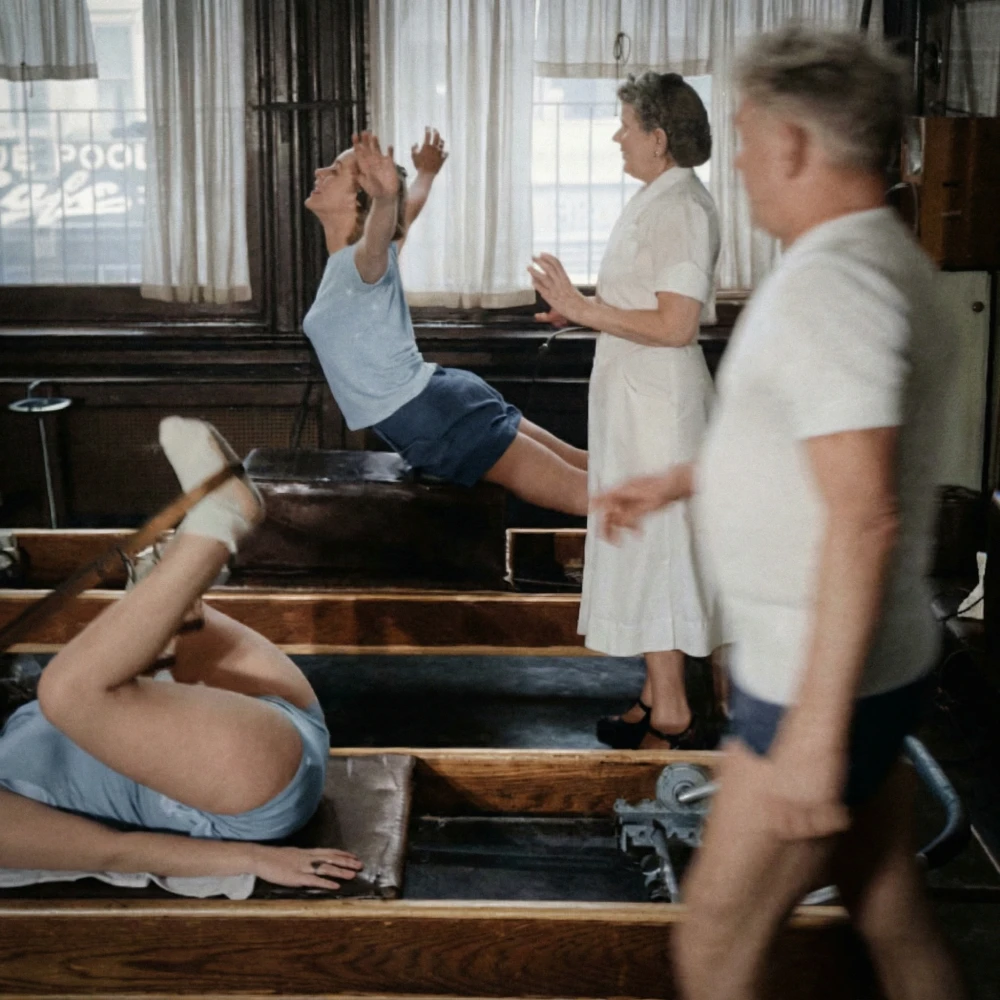
Clara’s Role in Shaping Contrology
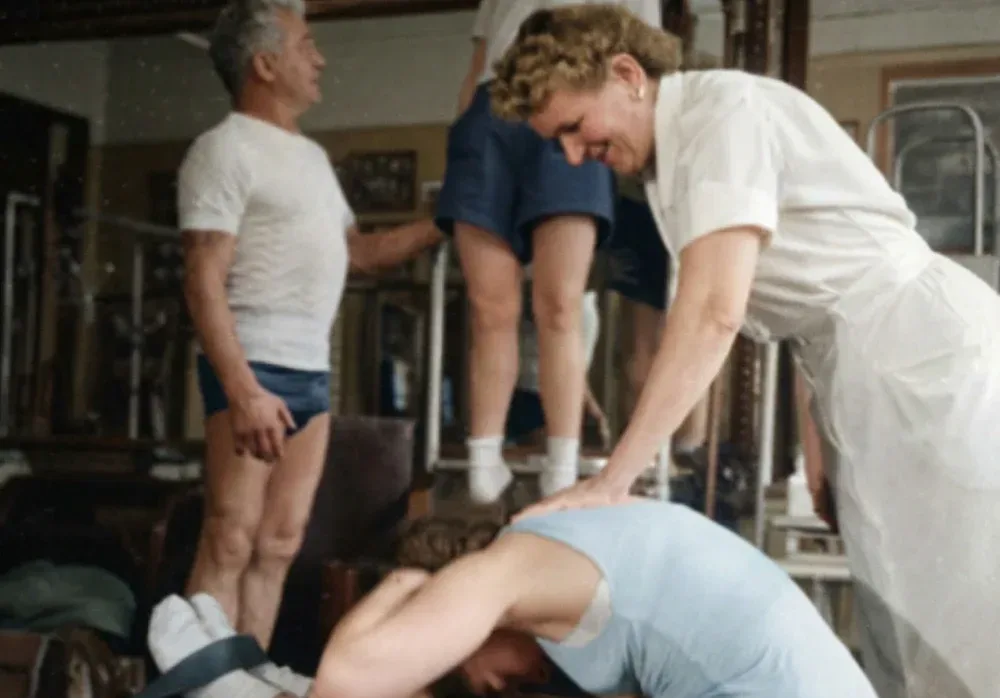
Clara was the opposite of Joseph’s energy, and that is precisely why they formed such a perfect combination. While he was demanding, uncompromising, and focused on form, she brought: gentleness, empathy, patient observation, and a deep understanding of the body’s individual limitations. It was Clara who softened the rigor of the Pilates method, translated technique into the language of feeling, taught through touch and presence, and saw the person, not just the movement. Her teaching was not about correcting—it was about guiding.
After Joseph’s death, it was she who ran the studio, taught the next generations, and passed the method on to Romana Kryzanowska and other Pilates Elders. She ensured the continuity of the teaching. Without her, Contrology might have disappeared.
Clara Pilates – Pioneer of the Modern Approach to Movement
What Clara did intuitively is what we now call the modern approach. Only contemporary science has given names to what Clara applied naturally long before research, terminology, and systems emerged:
- slow teaching – teaching through tempo and awareness,
- co-regulation through contact – the teacher’s presence as an element of stabilization,
- breath as a tool of trust and regulation,
- gentle guidance instead of dominance,
- reading the body’s signals instead of imposing form,
- somatic approach to movement,
- relationship-based teaching.
In an era when the world marveled at machines and technique, Clara’s subtlety was not appreciated. Today we know that she was the bridge between biomechanics and the subtlety of the method.
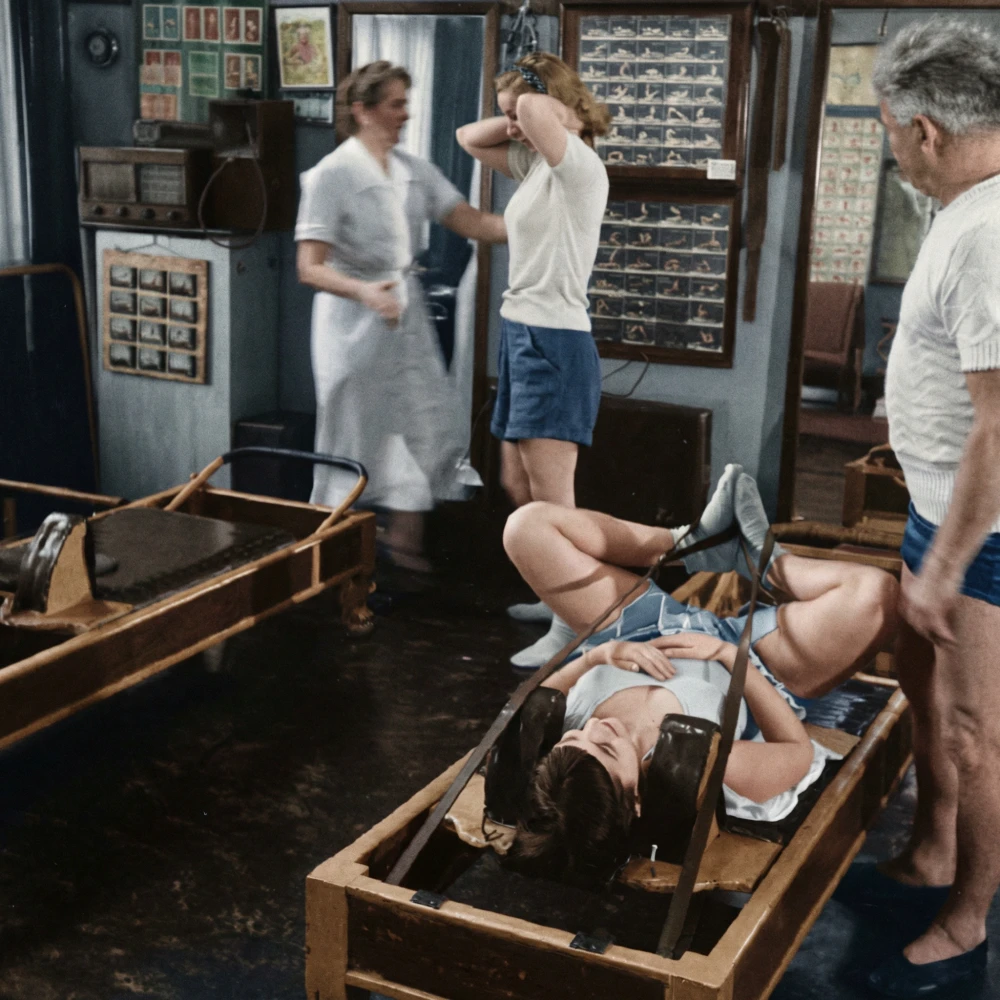
Many contemporary teachers, often unconsciously, return to her philosophy:
- working with the nervous system,
- the importance of safety and trust,
- individualization of the teaching process,
- mindfulness instead of forced correction.
We see this in working with breath as nervous system regulation, individualization of exercises, attention to tempo and the body’s boundaries, and respect for the process, not just the outcome. All of this is Clara’s legacy.
It is precisely this approach that has become the foundation of modern, conscious Pilates.
Clara in the Philosophy of Sinya Pilates
At Sinya Pilates, her presence is alive. Not as a historical figure, but as a way of thinking about movement.
This is why:
- we teach observation before we teach correction,
- we respect each student’s tempo,
- we prioritize relationship, not pressure,
- we treat the body as a partner, not a tool,
- we teach teachers mindfulness, not just technique.
Clara’s spirit is present in every aspect of our teaching system. The true method does not shout. It does not dominate. It does not impose. It guides.
Clara Pilates did not create machines.
She did not write a manifesto.
She did not seek recognition.
Yet it was she who made Joseph’s method human and timeless.
Today, as Pilates returns to mindfulness, softness, and intelligent movement, we can say one thing—the world has finally caught up with Clara.

Add comment