


No products in the cart.

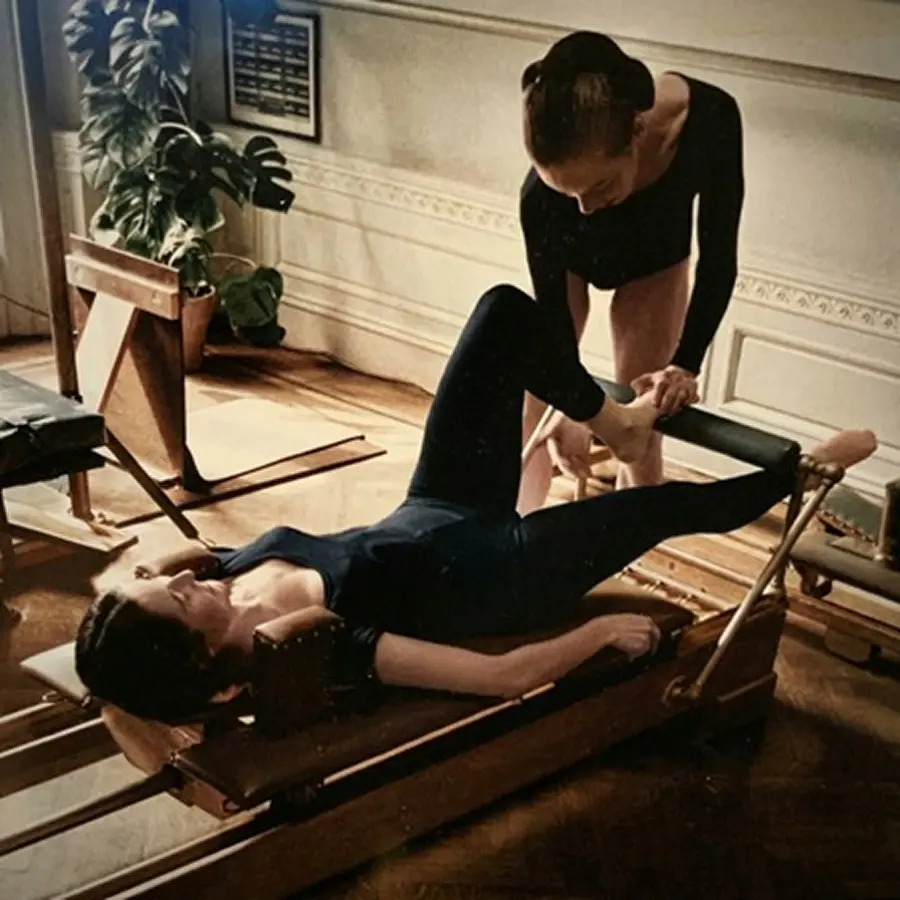
The history of Pilates does not end with one name. Although Joseph Hubertus Pilates created Contrology, his method survived thanks to the people who learned directly from him and his wife Clara. They, now called Pilates Elders (the first generation of Pilates), became the bridge between the creator’s original vision and the modern world of movement.
Without them, Pilates would not have stood the test of time. They carried the method from a small studio on 8th Avenue in New York to the entire world.
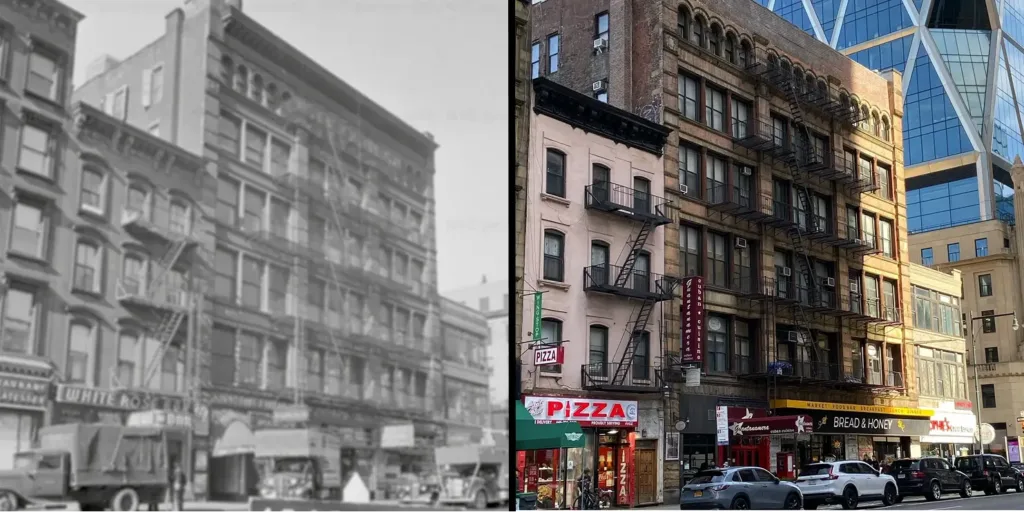
Who Was the First Generation of Pilates?
The first generation consists of students who learned directly from Joseph and Clara Pilates. They encountered Contrology in its raw, original form, practiced in the original studio, and assumed responsibility for the method’s further development.
Each of them interpreted it slightly differently, according to their own body, experience, and personality, but all preserved its foundation: conscious movement, control, and the integration of body and mind. Each took part of the Contrology idea and developed it according to their own professional path. Thanks to them, the method not only survived but began to live its own life, maintaining its core while gaining new dimensions.
Although they differed in temperament, approach, and teaching style, they shared one thing: direct contact with Joseph and Clara and deep respect for the idea of Contrology.
In the genealogy of Pilates, everything begins with two figures, not one.
- Joseph created the structure, the apparatus of movement, the philosophy of control and strength.
- Clara gave the method softness, mindfulness, therapeutic quality, and a human perspective.
It was their joint work that created the foundation from which all subsequent schools emerged.
The First Generation – Branches of One Tree
Joseph’s students did not create a single line. They created several branches of the same tree, each based on a different aspect of the method.
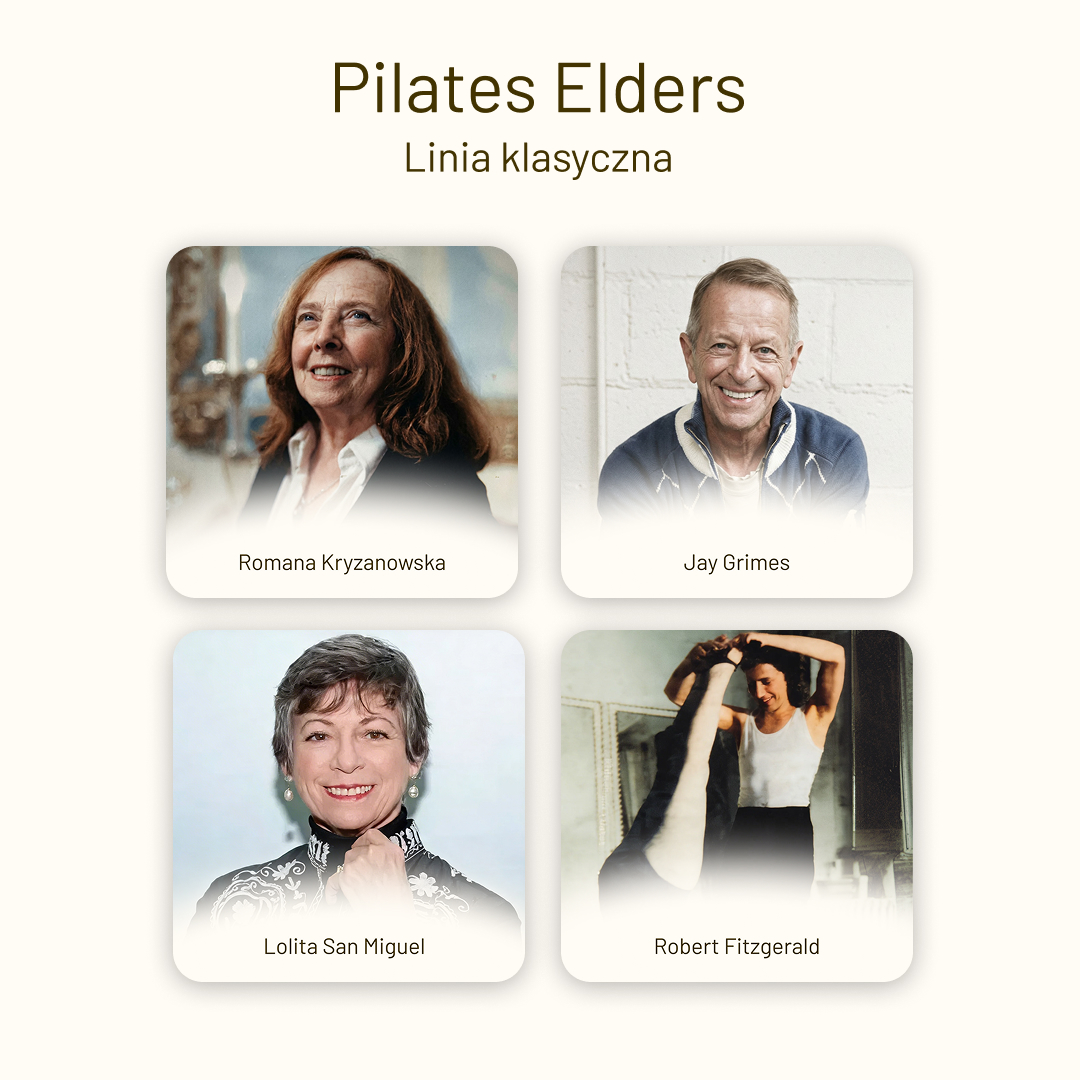
Classical Line
Romana Kryzanowska, Jay Grimes, Lolita San Miguel, Robert Fitzgerald
- preservation of the original repertoire
- fidelity to the exercises from 8th Avenue
- no modifications
- emphasis on discipline and precision
This is the “pure lineage” of Contrology.
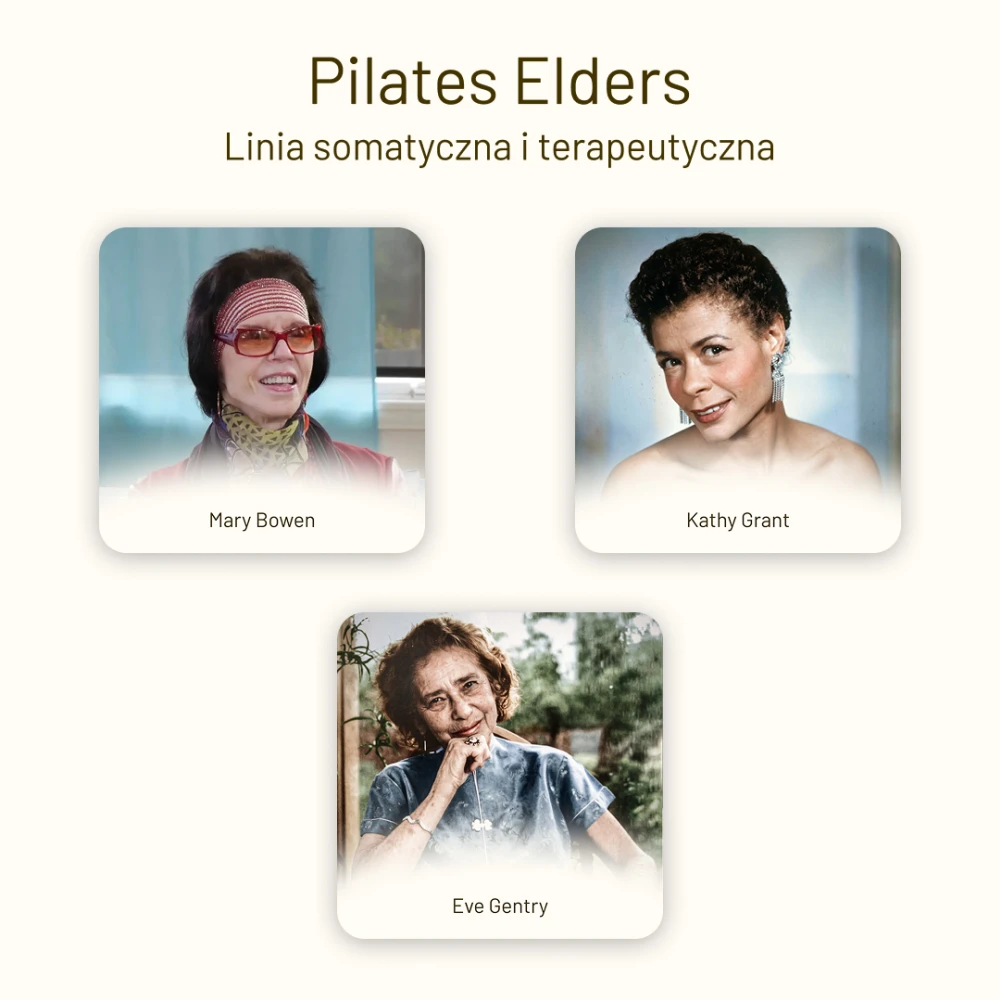
Somatic and Therapeutic Line
Kathy Grant, Mary Bowen, and Eve Gentry
- work with the nervous system
- body and emotional awareness
- individualization of movement
- integration of rehabilitation and Pilates
This is the branch from which contemporary therapeutic Pilates emerges.
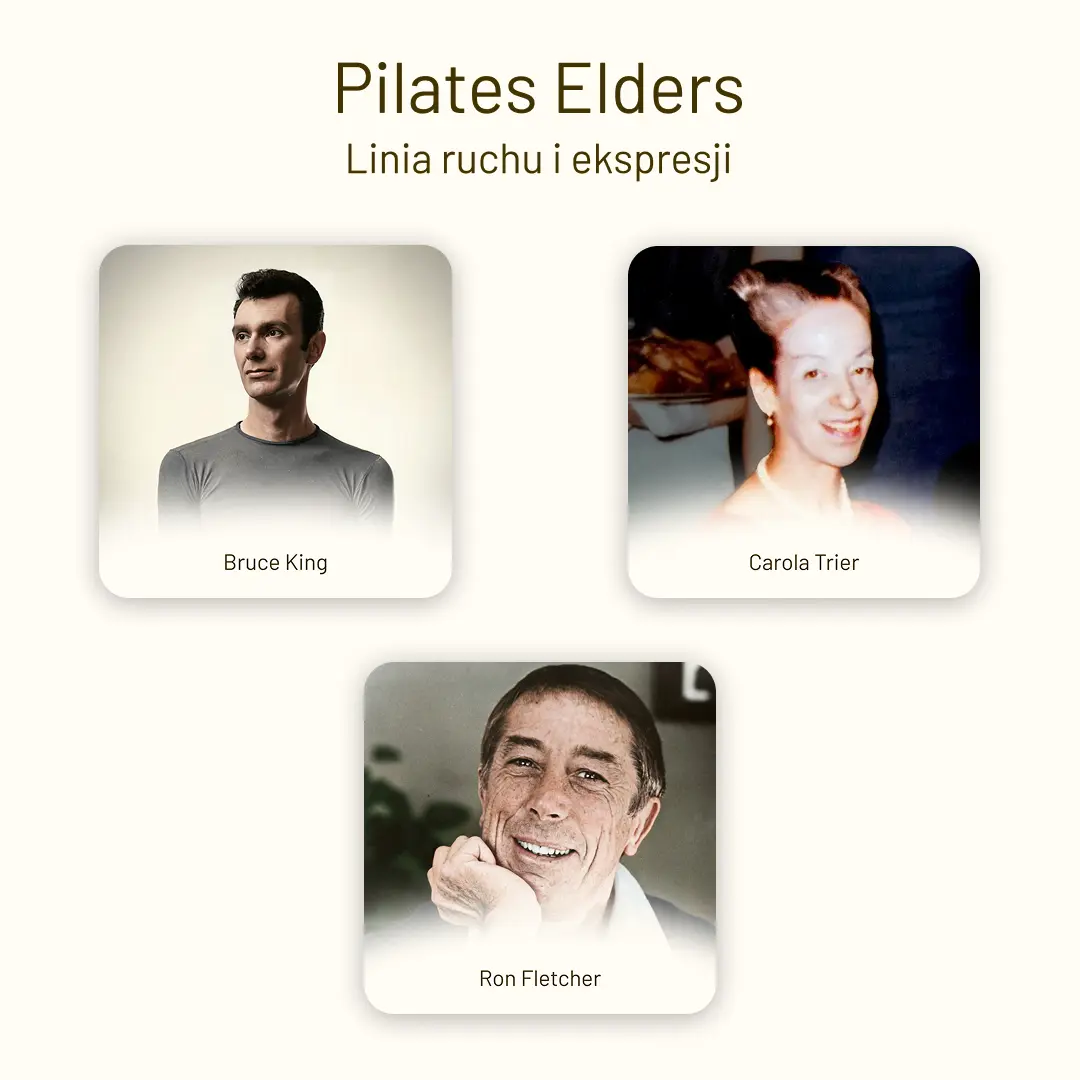
Movement and Expression Line
Bruce King, Carola Trier, and Ron Fletcher
- fluidity and spiraling
- standing work
- connection with dance
- breath as the rhythm of movement
This is the line that opened Pilates to expression, the stage, and dynamics.
Although the paths of the Pilates Elders diverged, they never became contradictory. Each developed a different aspect of the same method.
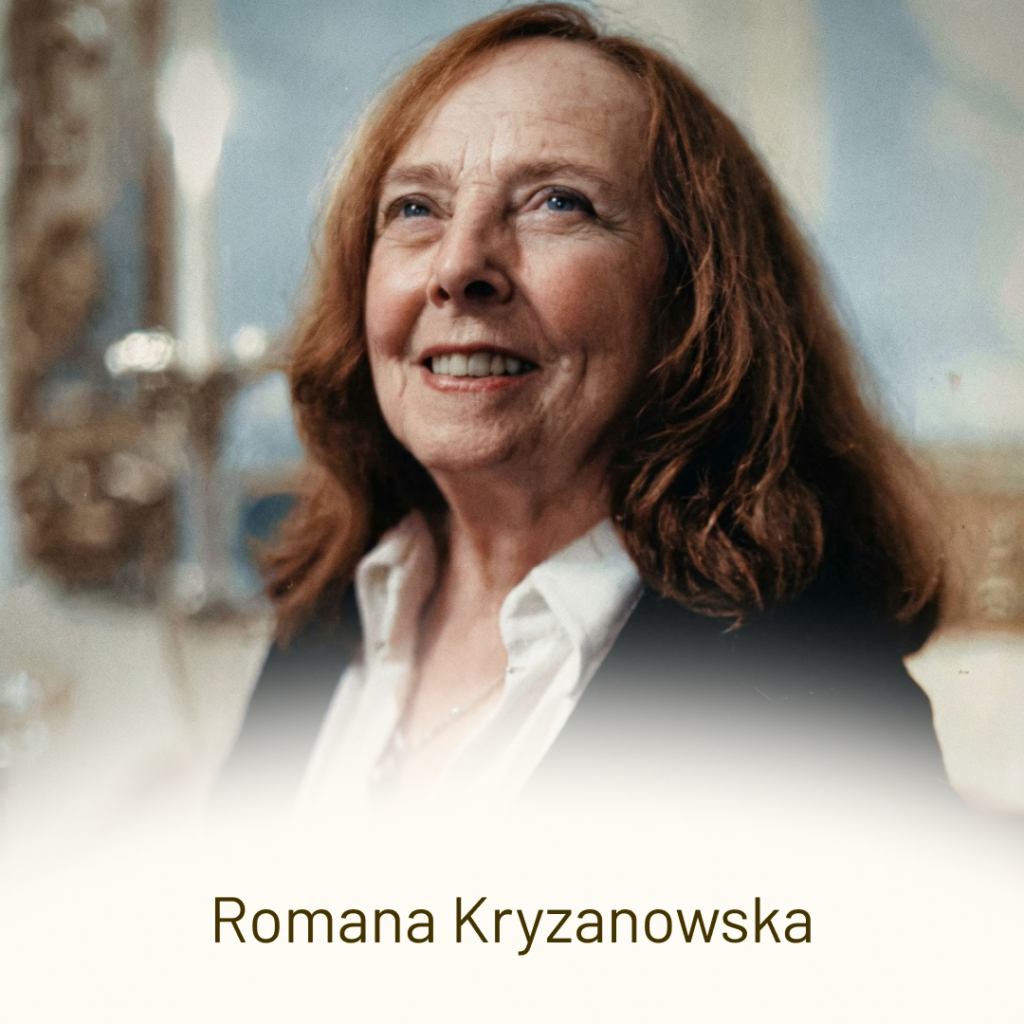
Romana Kryzanowska
Romana Kryzanowska was the closest continuator of Joseph and Clara’s teaching. She was entrusted with running the studio on 8th Avenue after Clara’s passing. She believed her mission was to protect the method from distortion and simplification.
Her approach was characterized by:
- uncompromising fidelity to the original repertoire,
- discipline and precision of movement,
- deep conviction that the method does not require “improvement,” only understanding.
Romana became the symbol of classical Pilates, the pillar upon which the entire classical line rests to this day.

Jay Grimes
Jay Grimes remained closest to the original form of teaching from 8th Avenue.
His style was characterized by:
- uncompromising fidelity to the method,
- no modifications,
- preservation of the original structure of exercises.
To this day, he is recognized as one of the purest representatives of classical Pilates.
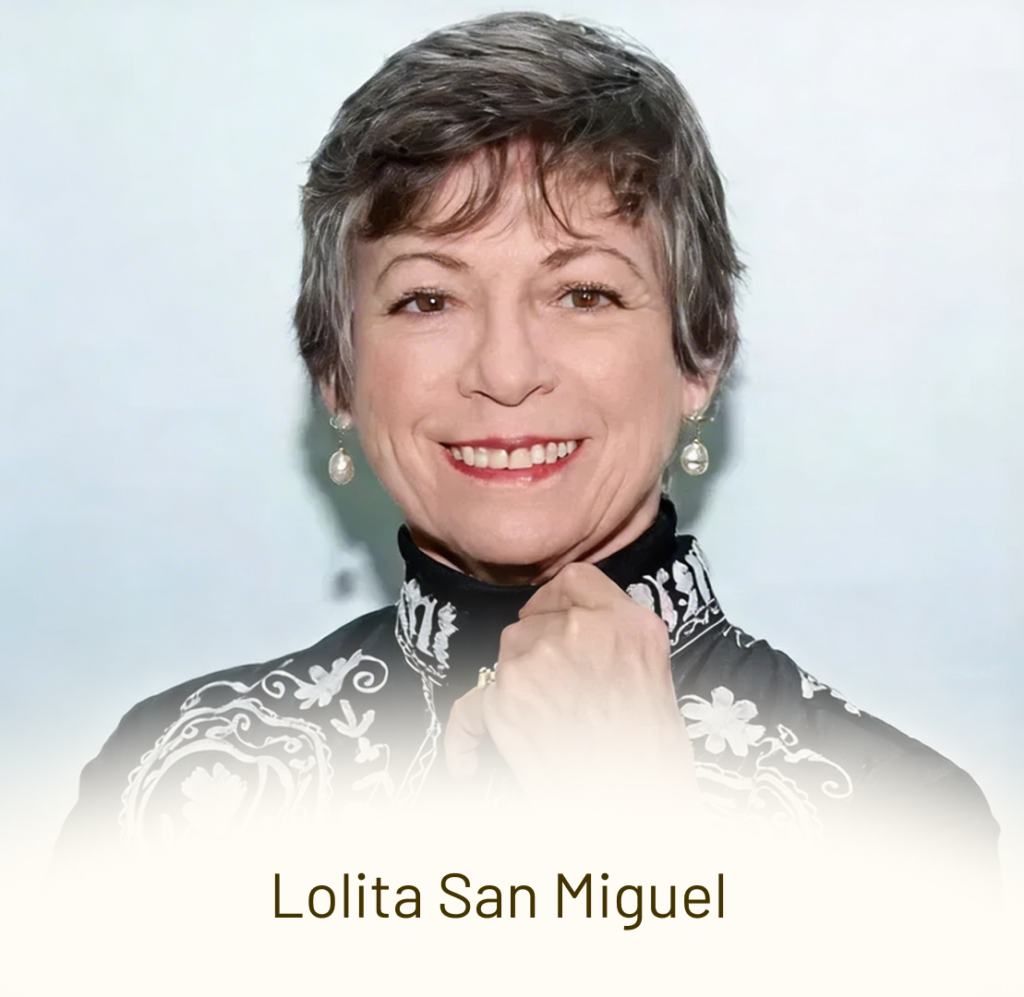
Lolita San Miguel
Lolita San Miguel is one of two people in the world who received a teaching certificate directly from Joseph and Clara Pilates. Her teaching is characterized by tremendous responsibility for the quality of transmission.
Her approach:
- combines classical form with tremendous attention to technique,
- emphasizes the ethics of the teaching profession,
- maintains the coherence of the method without simplifying its principles.
To this day, she is recognized as one of the most important figures in preserving the authenticity of Pilates.
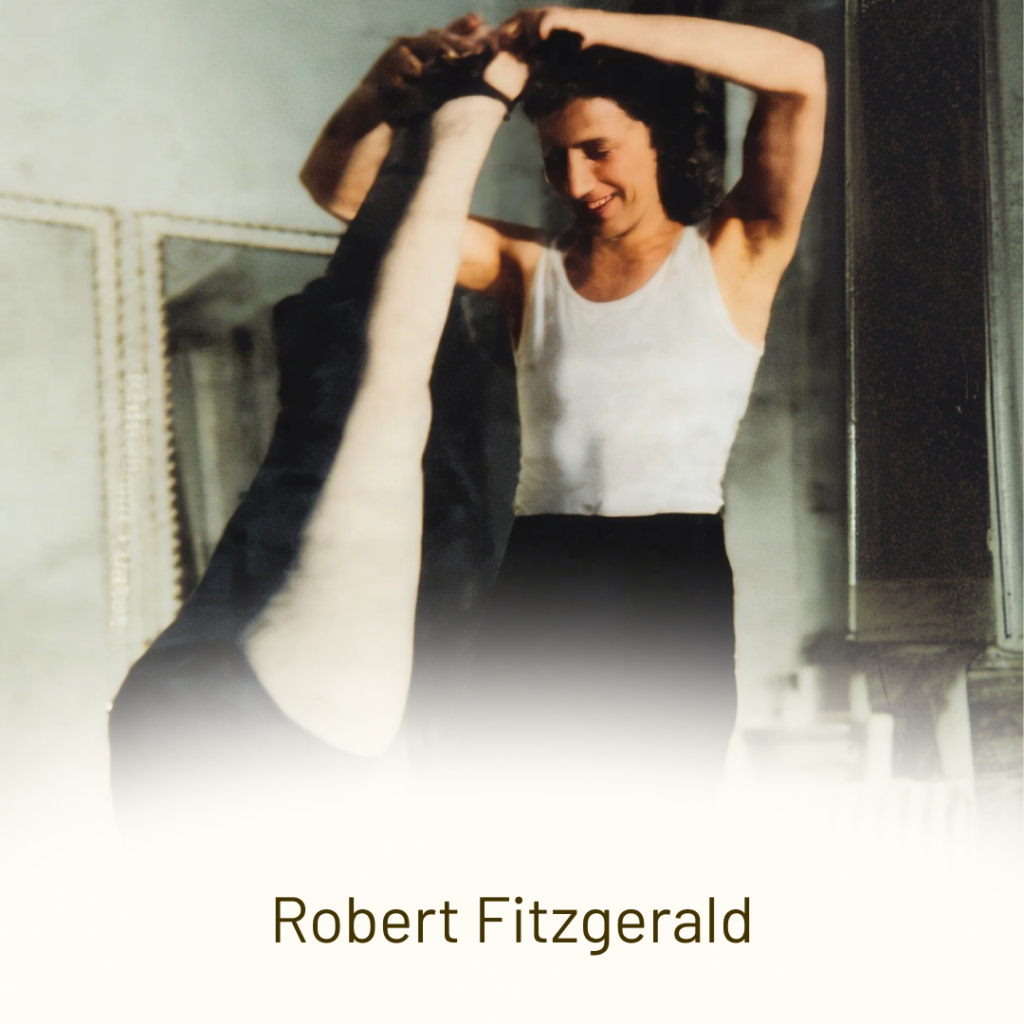
Robert Fitzgerald
Robert Fitzgerald was one of the less publicized but extremely important representatives of the first and second waves of Pilates method transmission. He learned directly from Joseph Pilates and then passed on the knowledge in the spirit of classical control, precision, and order of movement.
His approach was characterized by:
- strong emphasis on technique and correct execution,
- consistency in working with the classical repertoire,
- attention to discipline and structure of exercises,
- respect for the original principles of Contrology.
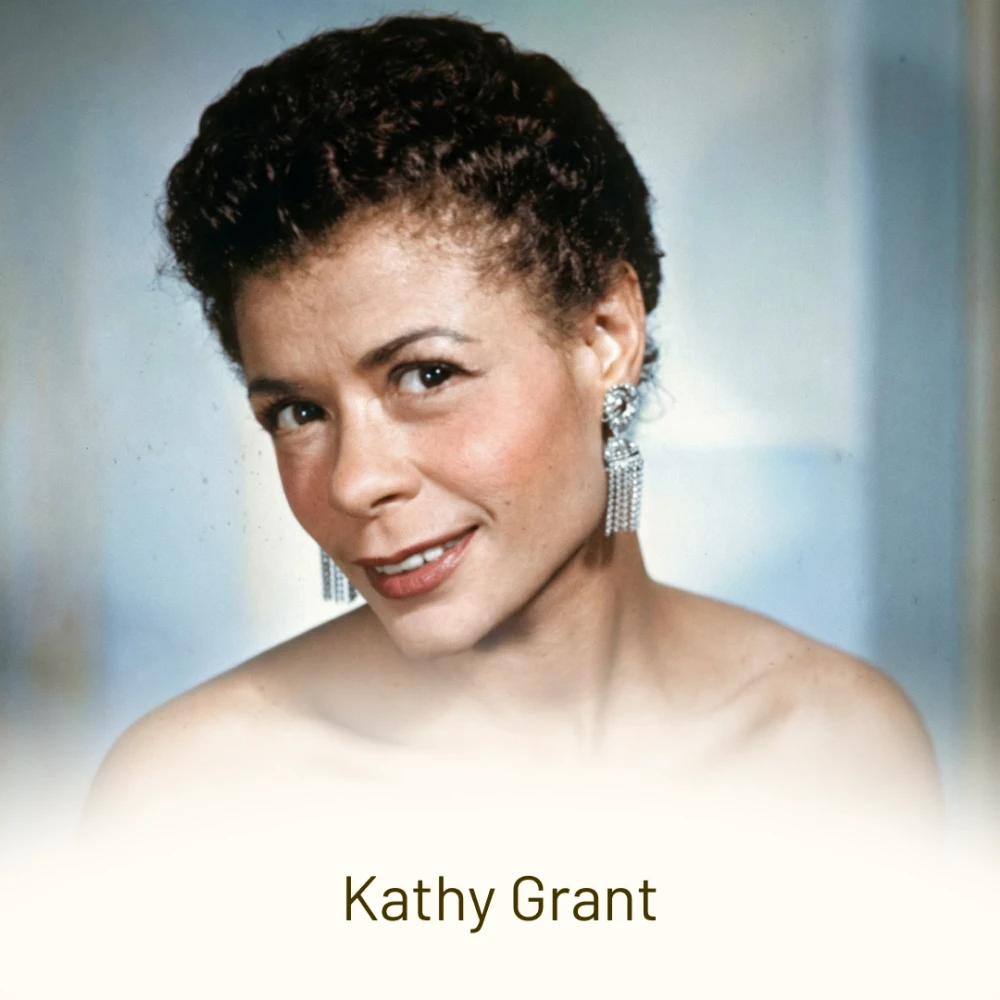
Kathy Grant
Kathy Grant was one of Joseph’s most perceptive and simultaneously most innovative students. Her teaching extended beyond the form of exercises, focusing on feeling, quality, and body awareness.
She was known for:
- exceptionally precise cueing,
- work with micro-movement,
- use of imagination and perception,
- connecting movement with expression and breath.
It was Kathy Grant who created the foundations of the contemporary somatic approach in Pilates. Her influence is visible today in the work of many teachers, including Sari Mejia Santo and movements based on mindfulness.

Eve Gentry
Eve Gentry was one of the first people to recognize the potential of Pilates in rehabilitation. Her work combined Contrology with a modern approach to movement therapy.
Her contribution includes:
- development of corrective work,
- use of Pilates in post-injury rehabilitation,
- introduction of a functional approach,
- work with limitations and dysfunctions.
It is from her line that many contemporary biomechanical and therapeutic concepts used in Pilates derive.
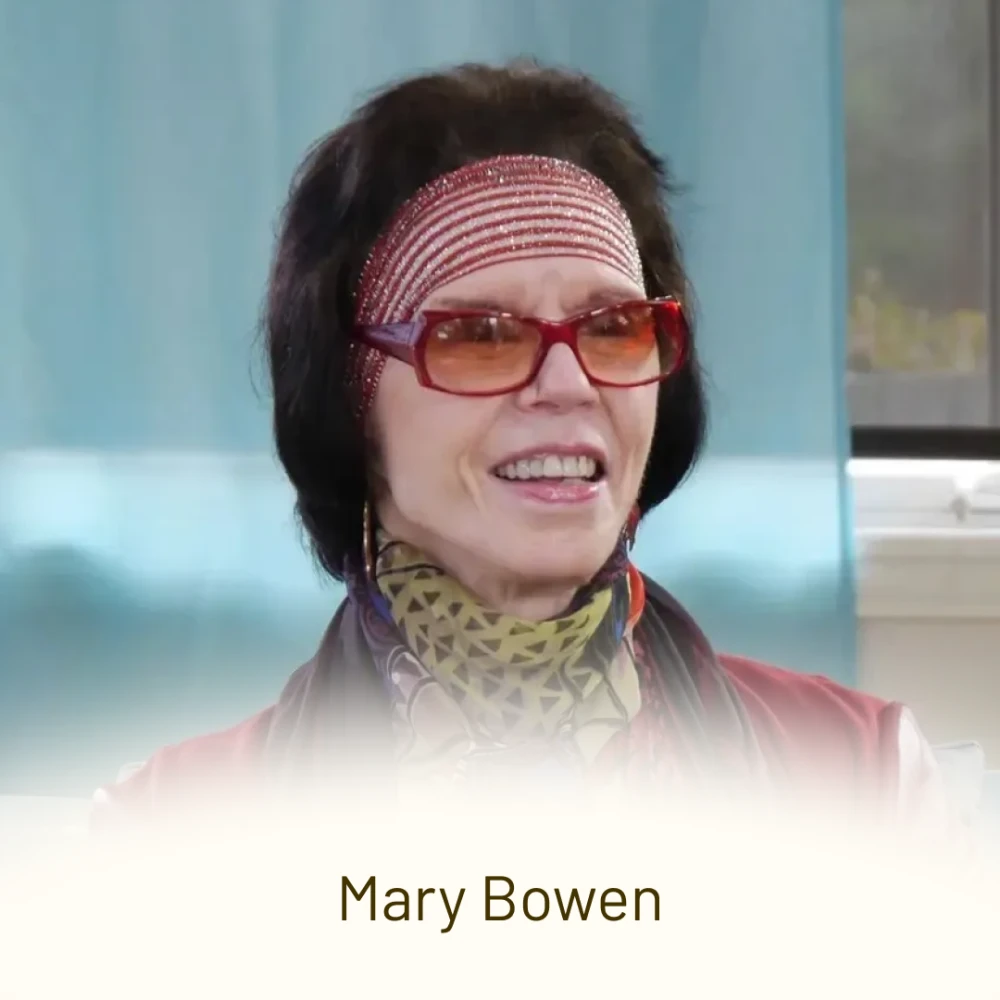
Mary Bowen
Mary Bowen combined Pilates with psychology and work on awareness.
Her approach included:
- integration of body and emotions,
- work with emotional tension,
- deep observation of nervous system responses.
She was one of the first to recognize that movement is not only mechanics but also a record of emotional experiences.
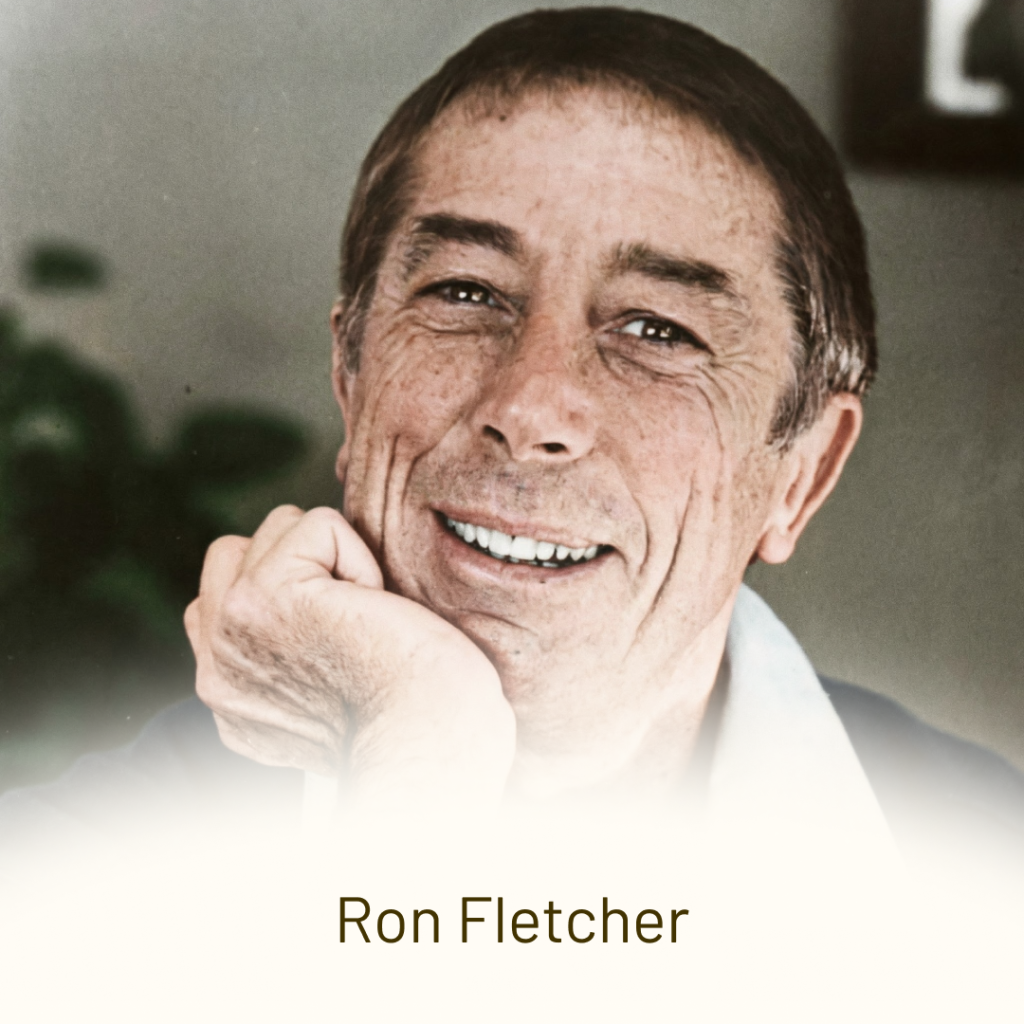
Ron Fletcher
Ron Fletcher was a student of Clara and one of the most distinctive personalities in the history of Pilates. As a dancer and choreographer, he brought elements of expression, fluidity, and rhythm to the method.
His contribution includes:
- introduction of standing work,
- development of “percussive breathing”,
- spiral work and dynamic transitions,
- connection of Pilates with stage movement.
Thanks to him, Pilates became more open, spatial, and expressive.
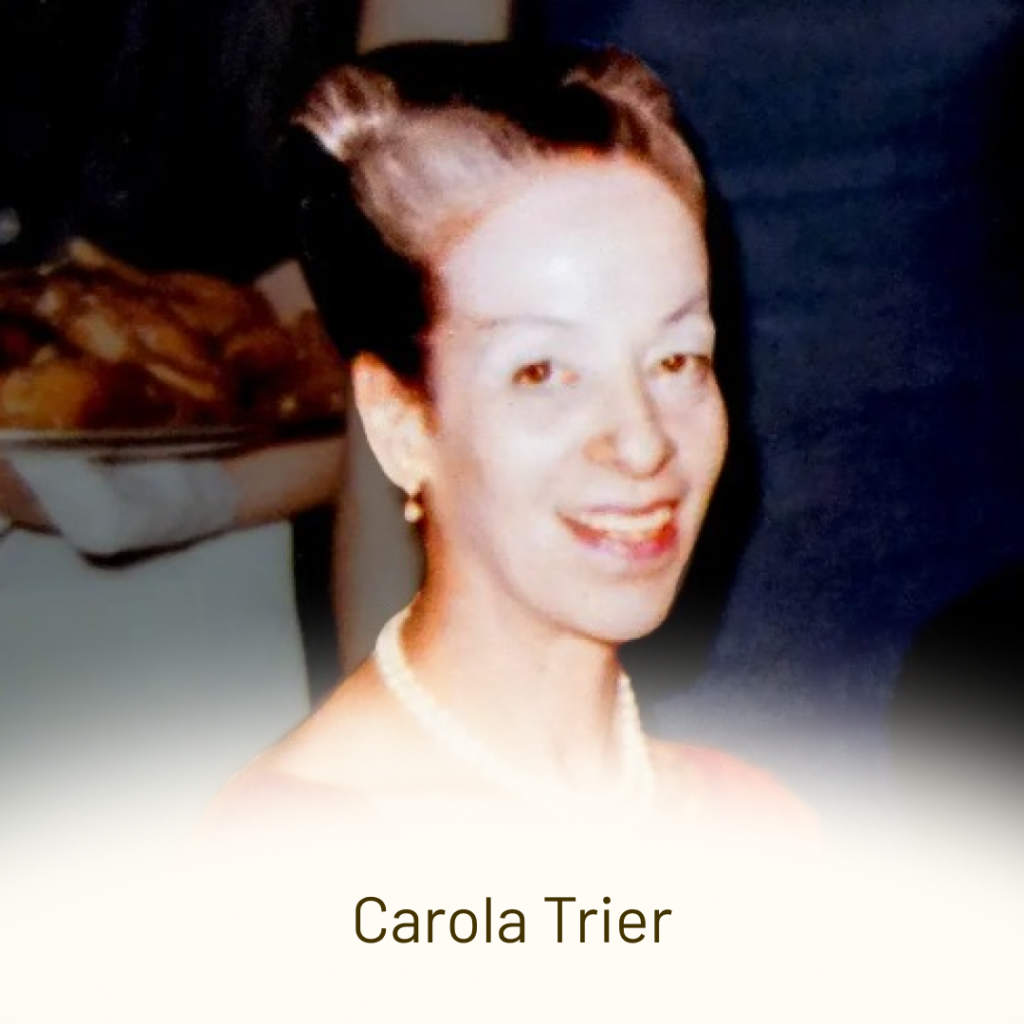
Carola Trier
Carola Trier was one of the first to combine Pilates with medicine and dance. She ran one of the first Pilates studios in Manhattan and collaborated with the medical community.
Her distinctive characteristics:
- anatomical precision,
- elegance of movement,
- excellent body organization,
- work with dancers and people after injuries.
She proved that Pilates can be both artistic and therapeutic.
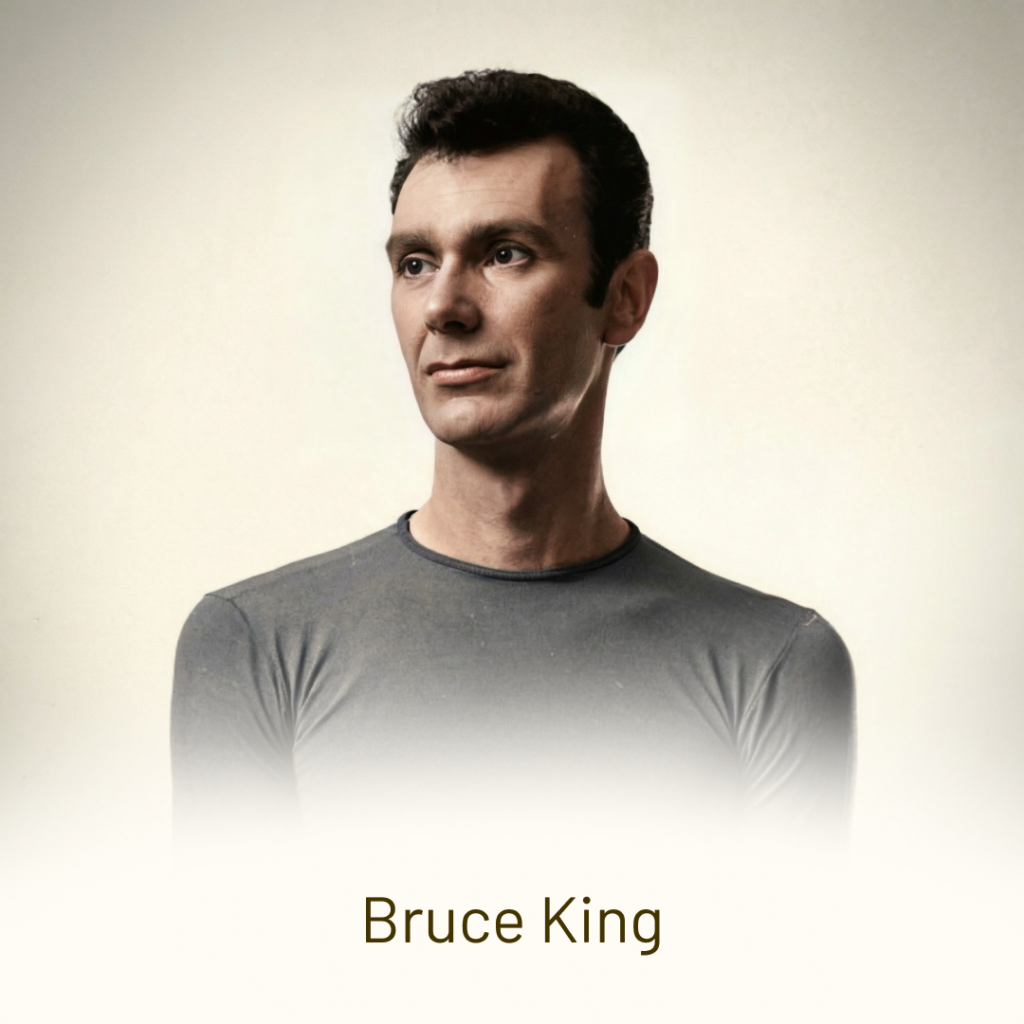
Bruce King
Bruce King belonged to the group of teachers who approached the original form of Contrology with tremendous respect. He was a dancer and educator, and his way of working was distinguished by exceptional attention to structure, rhythm, and quality of execution.
His approach was characterized by:
- deep understanding of the classical repertoire,
- precise work with body alignment,
- attention to continuity and logic of sequences,
- respect for the original tempo and intention of exercises.
One Source. Many Paths. One Responsibility.
When we speak of the first generation of Joseph Pilates’ students, we are not merely speaking of a group of outstanding teachers. We are speaking of the genealogy of the method, of a living transmission of knowledge that developed like a tree: from one trunk, through different branches, but with the same root system.
Romana preserved the structure.
Jay preserved the purity of transmission.
Robert focused on consistency.
Kathy added depth.
Eve opened the path to therapy.
Mary touched emotional awareness.
Ron brought expression.
Carola connected movement with anatomy.
Bruce maintained precision of movement.
Although the paths of Joseph Pilates’ students diverged in different directions, they all had a common beginning: Contrology, conscious movement based on respect for the body, breath, and the inner intelligence of the human being.
Sinya does not choose one path; it understands all of them. It does not copy forms; it reads their meaning.
It does not recreate the past; it carries it forward with responsibility. From the source to the future.
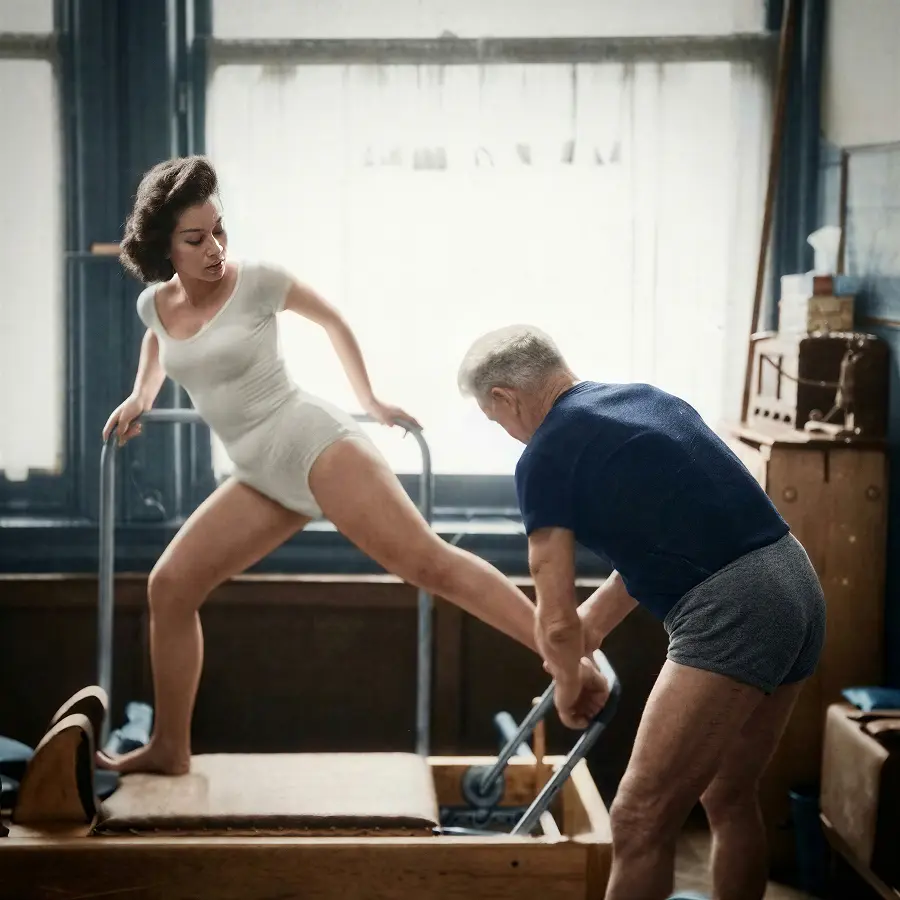
Genealogy as Responsibility
The mission of Sinya Pilates is to create opportunities for contact with the source, integration of teachers, and preservation of the essence of the method while simultaneously developing it.
By inviting participation in joint meetings, workshops, conferences, and training sessions with Joseph’s generation and subsequent teachers of the second and third generations, we aim to honestly carry the mission of continuing the legacy. Not through copying, but through understanding the source, integrating experiences, and taking responsibility for transmission. Sinya treats this legacy as a commitment:
- to quality,
- to honesty toward the method,
- to respect for the body,
- to development without losing meaning.
True tradition is not about stopping time. It is about not losing meaning on the path forward.





Add comment